Facade access & fall protection / Across 15 states
Acosta Williams Engineering inspects, tests, certifies and designs facade access and fall protection systems across the full life of the equipment. Independent, centered in New York City, and stamped by a licensed Professional Engineer.
What we do
Facade access and fall protection equipment, for New York buildings, across the whole life of the equipment.
Facade access and fall protection equipment is what lets people work safely on the outside of a building: window cleaning, facade repair, inspections, anything performed near a fall hazard. It is governed by OSHA, by New York State Department of Labor rules, and by a stack of national standards that change.
Acosta Williams Engineering was formed in June 2022 and works across fifteen states. The firm is centered in New York City, and the majority of our work is for New York City clients: existing buildings, plus the new construction that becomes them. We advise developers, design teams and construction teams before the building exists, and we inspect, test, certify and design for the equipment once it does.
We work alongside every major service provider in the New York market. Relationships built over fifteen years mean we know what each one does well, and a recommendation from us is grounded in that, not in who we sell for.
The equipment lifecycle
Most consultants sell a menu. Facade access equipment does not work that way. What gets specified during design becomes the equipment somebody has to maintain for thirty years, and then replace. We cover the whole arc, which means the advice at each stage accounts for the next one.
Design advice and consulting for developers, designers and construction teams who need compliant, operational systems before the building exists.
Annual and periodic inspection, load testing and non-destructive testing of installed equipment, with the documentation an owner needs on file.
Equipment maintenance management: keeping a building's systems on interval, on record, and out of the emergency category.
Engineering design for repair, replacement and installation when equipment reaches the end of its service life, or when the building's use changes.
Services
For existing buildings
For owners, property managers and facility teams who need equipment to be compliant, documented and actually usable.
For new construction
For developers, general contractors and design teams who need a system that will pass, and that will still work in year twenty.
Selected work
Every firm in this category publishes project names and photographs of buildings. None of them publish the work itself. Below is an actual sheet, drawn for a crew standing on a roof.
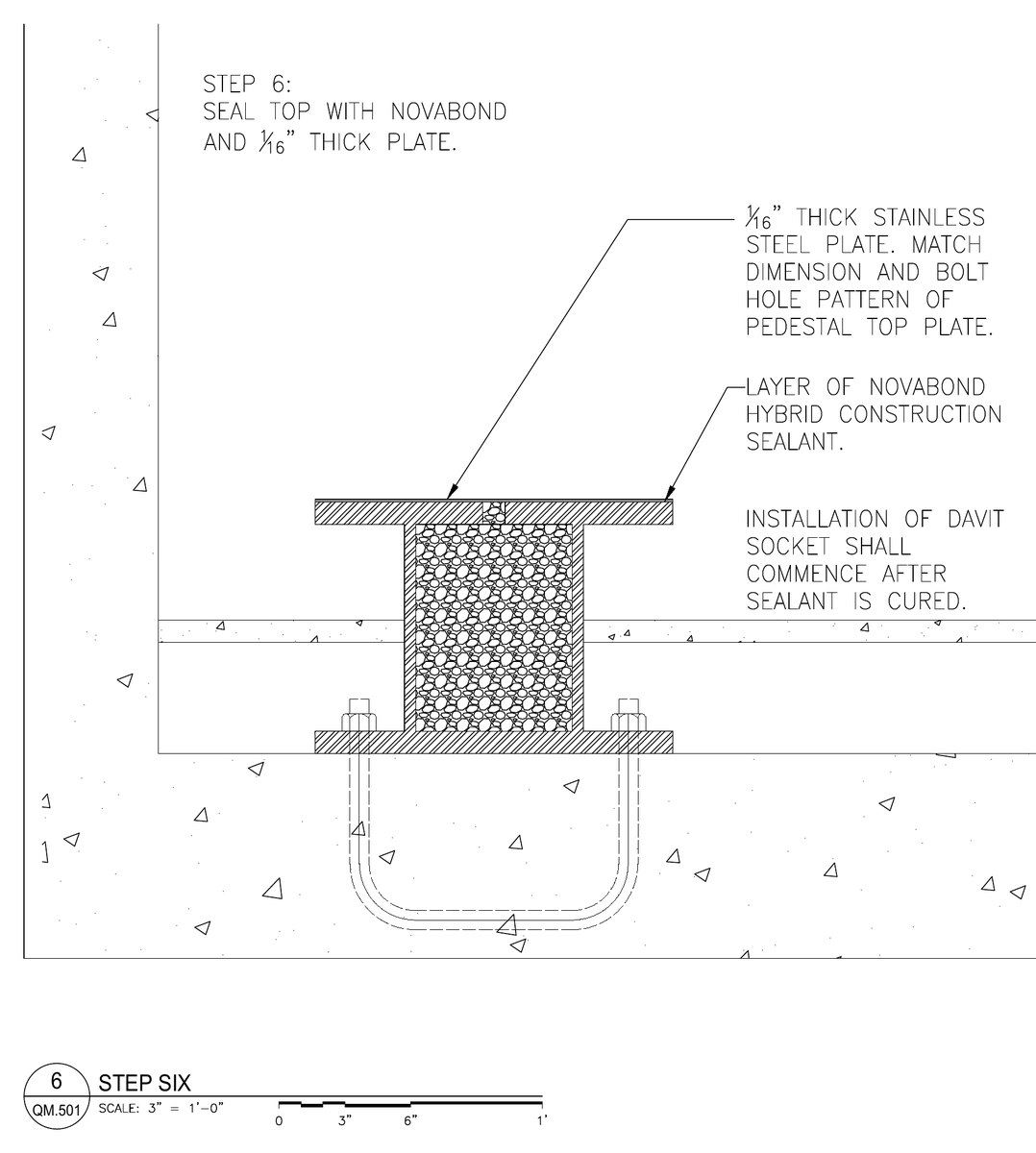
Detail sheet QM.501
A davit pedestal is the socket set into the roof that a davit arm drops into. Everything hanging off that arm loads through it. Pedestals collect water, which is why step one of this sheet is pumping the pedestal dry.
The rest is the repair, drawn in six steps so it is executed the same way on every pedestal: mix a two pound fibreglass polyurethane foam in a separate container, pour and fill the void, let it expand and cure, trim flush and sand the top plate clean, then seal with a hybrid construction sealant under a sixteenth-inch stainless plate cut to the pedestal’s own bolt pattern. Socket installation waits for the sealant to cure.
Six details, each in section with its own scale bar, drawn at three inches to the foot. Job number and date withheld.
Reserved for named work, cleared for public use. Two or three written as problem, approach, outcome.
Reserved for a redacted example of the deliverable. Layout and position are fixed so it drops in without a redesign.
Two slots are held on the live page and not yet filled: project write-ups for named work, and a redacted sample inspection report. Both have fixed layout positions so an asset drops in without a redesign.
Compliance reference
A working summary for owners and managers, not legal advice. Requirements change, and the applicable standard depends on the equipment and the building. Call us if you are unsure which applies.
| Standard | What it covers | Who it applies to |
|---|---|---|
| OSHA 1910.66 | Powered platforms for building maintenance. Governs the design, inspection, testing and use of suspended equipment used to service a building exterior. | Building owners nationwide with powered platform equipment. |
| OSHA 1910.27 | Scaffolds and rope descent systems, including the anchorage certification requirement for rope descent. | Owners whose facades are serviced by rope descent. |
| ASME A120.1 | Safety requirements for powered platforms and traveling ladders and gantries for building maintenance. The national consensus standard behind much of the inspection and load testing practice. | Owners, operators and engineers of powered platform systems. |
| Advisory Standard 101 | Industry advisory inspection standard for facade access equipment, used as the basis of a documented annual inspection. | Owners seeking a documented, defensible inspection record. |
| NYSDOL Code Rule 21 | New York State Department of Labor review and approval of facade access and window cleaning equipment on new construction, and of significant modifications. | Developers, GCs and design teams building in New York State. |
| ANSI/IWCA I-14.1 | Window cleaning safety, covering techniques and the support equipment used on new and existing buildings. | Owners and the service providers working on their buildings. |
Content on this page is a plain-language summary for orientation only. It is not a substitute for a licensed engineering opinion on a specific building.
Contact
Address or borough, what equipment is on the roof, and what brought you here. If there is a deadline attached, say so and we will tell you honestly whether it is achievable.
Call or email, and tell us the building address, the equipment on the roof, and any deadline attached.
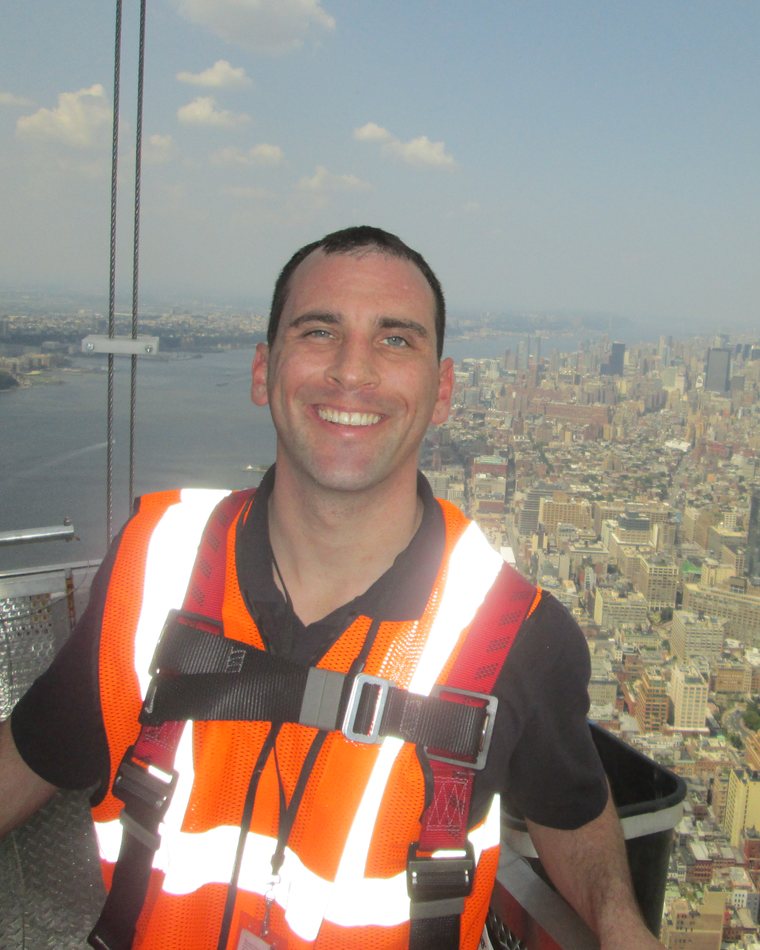
Twenty years inspecting facade access equipment on existing buildings. Every opinion this firm issues carries his stamp.